Evolution: Basic Concept
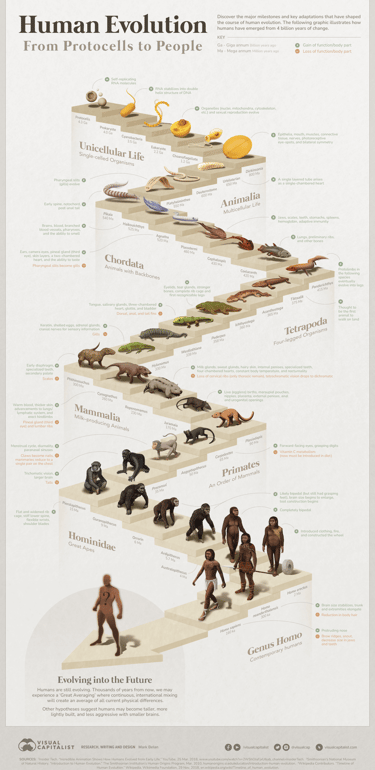
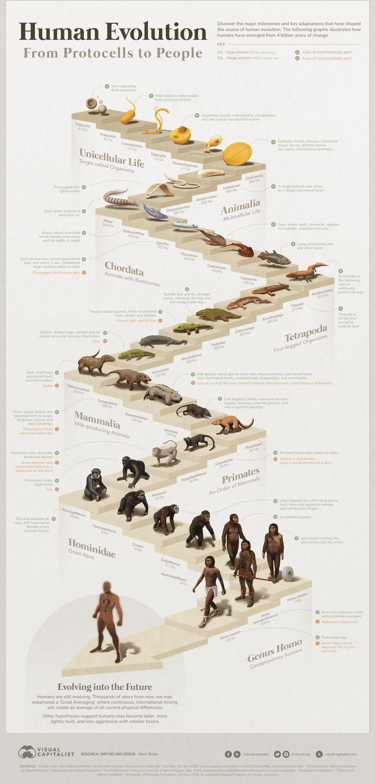
Evolution refers to the gradual change in populations of organisms over long periods of time. These changes happen because some traits can be passed from parents to offspring. Over generations, these heritable traits may become more common or disappear. Evolution does not mean individuals change during their lifetime; instead, populations evolve across generations.
Watch Intro To Evolution:

Evidence That Evolution Occurs
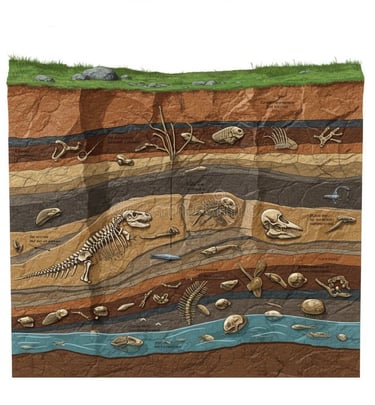
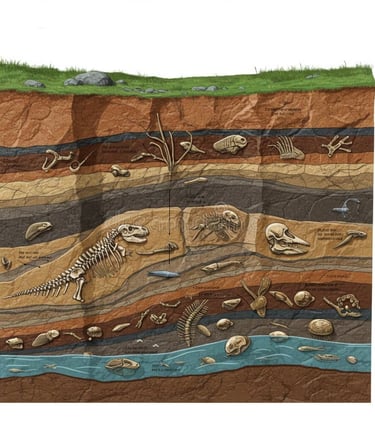
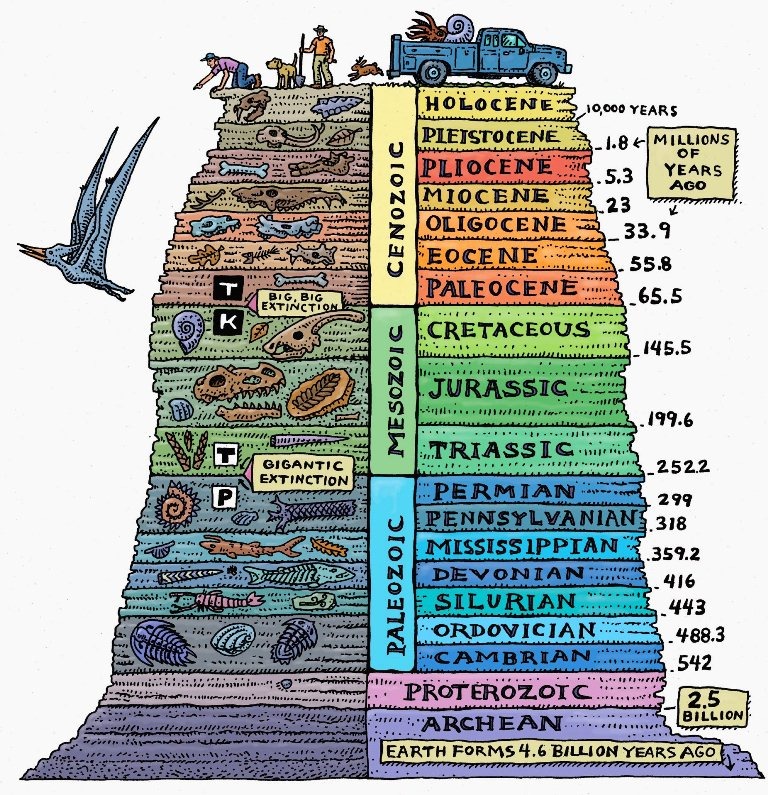
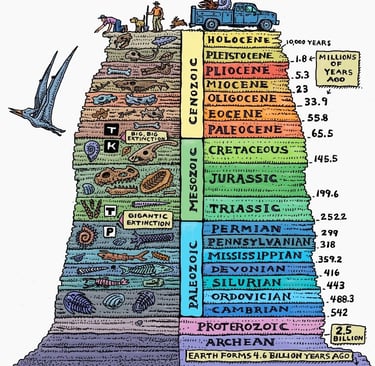
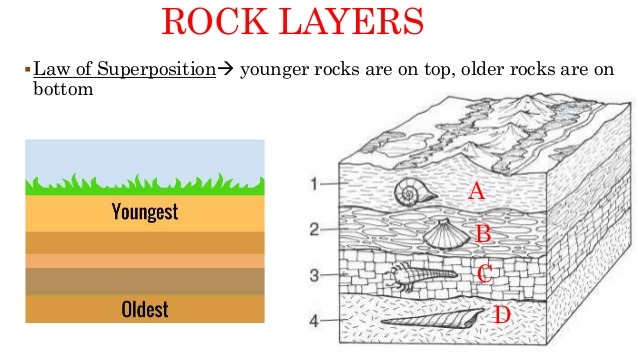
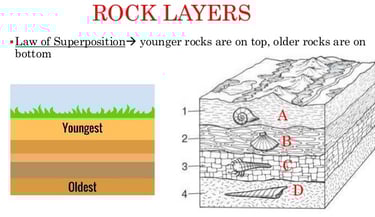
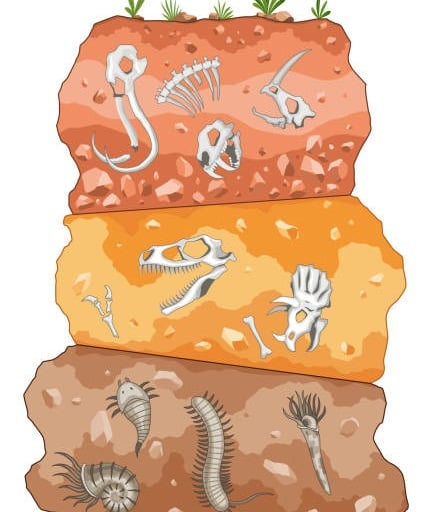
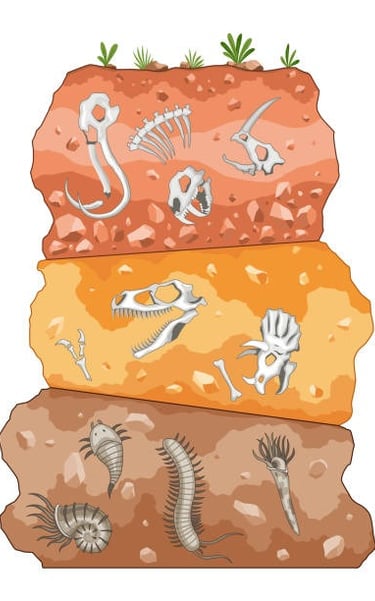
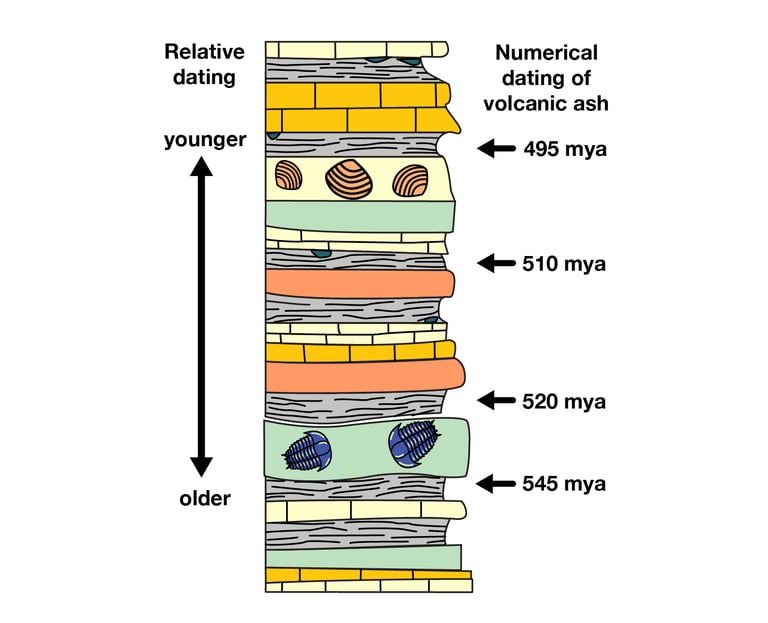
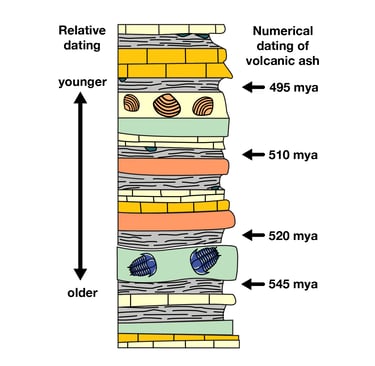
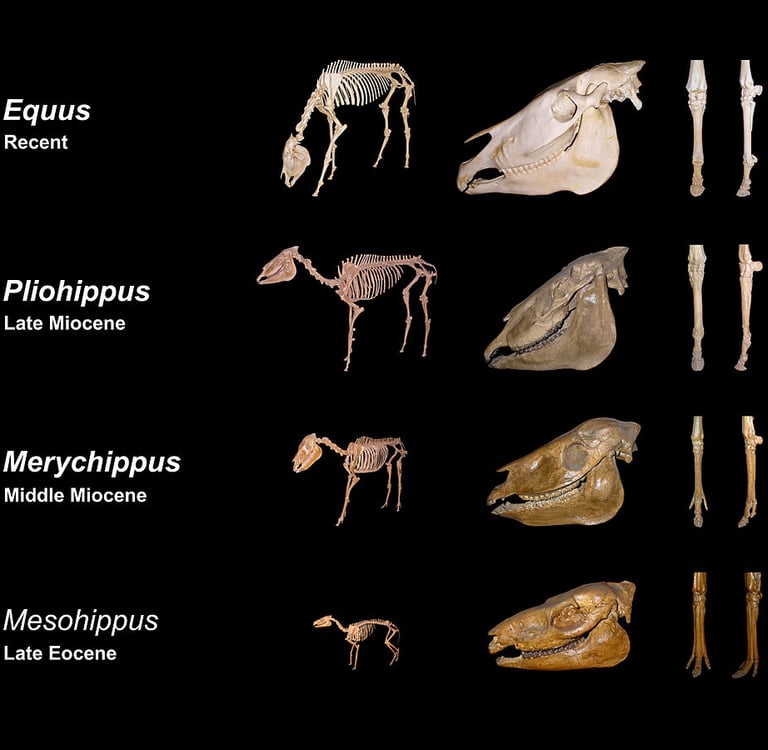
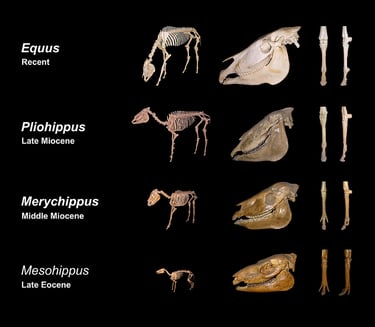
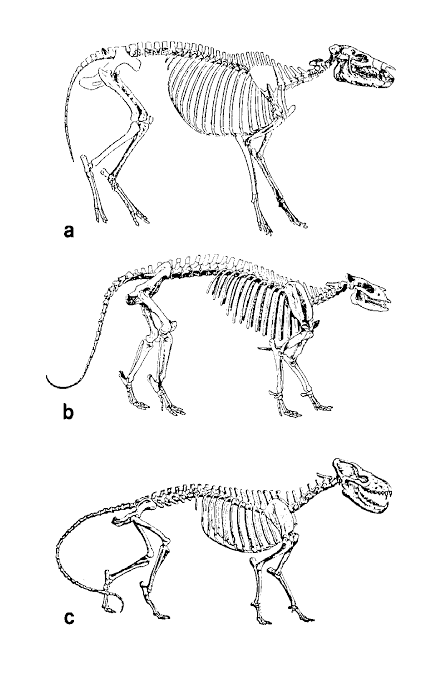
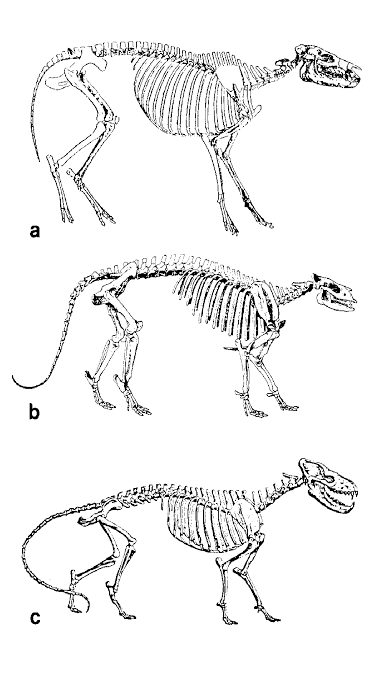
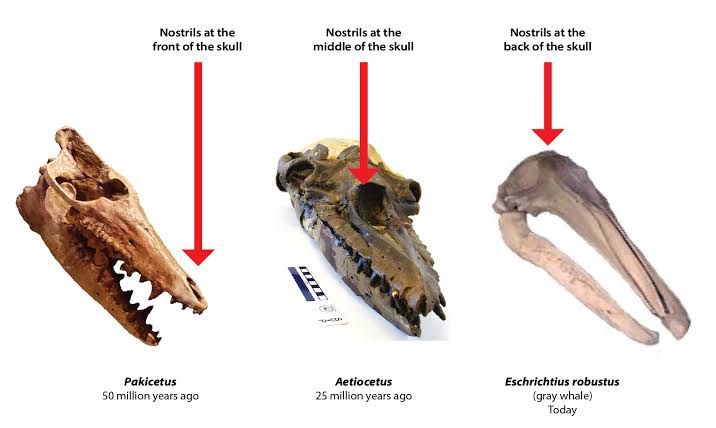
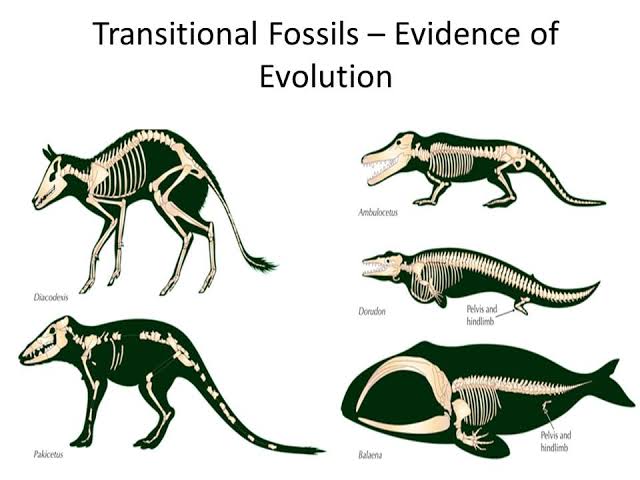
Fossils are the preserved remains or traces of organisms that lived in the past. Most fossils are found in sedimentary rocks, which form in layers and allow organisms to be buried and preserved. Fossils show that many organisms that existed before are now extinct and that life on Earth has changed over time.
Older fossils usually look less similar to modern species, while more recent fossils share more features with organisms alive today.
Fossil Record
Watch Video:
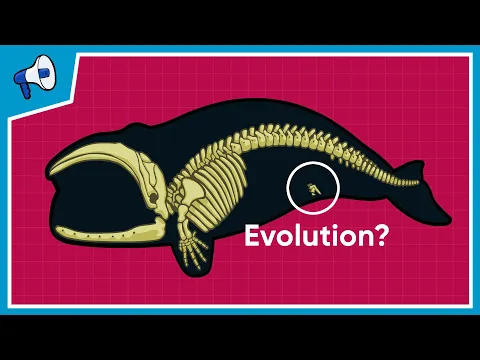
Comparative Anatomy
Scientists compare body structures to understand evolutionary relationships.
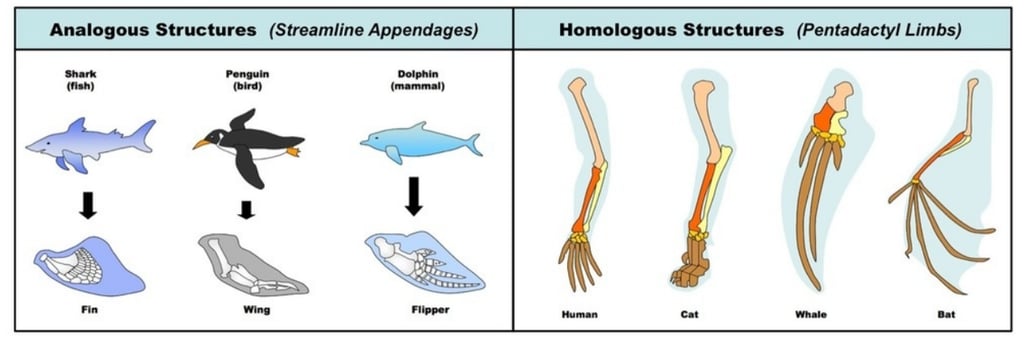
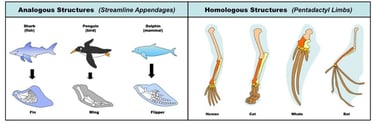
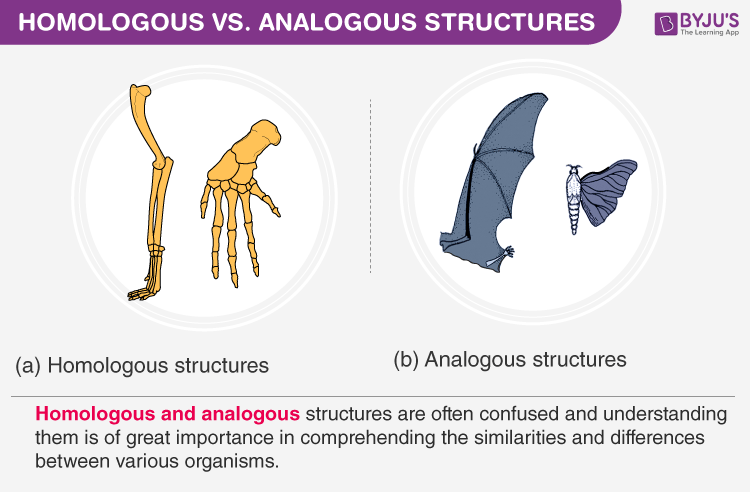
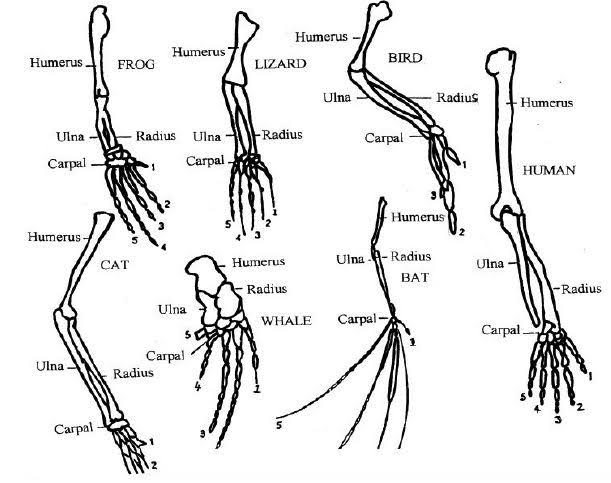
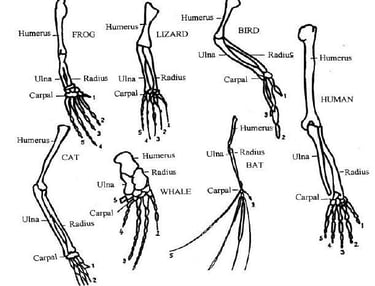
● Homologous structures are body parts that have the same basic structure and origin but may perform different functions. These similarities suggest a common ancestor.
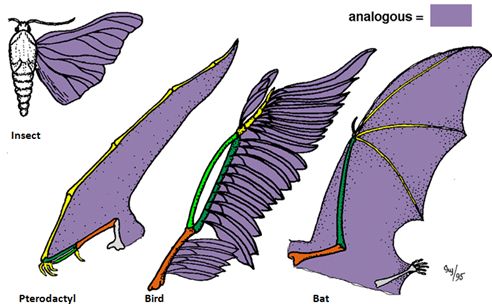
● Homoplasy (analogous traits) refers to similarities that did not come from a common ancestor but evolved independently due to similar environmental pressures.
Watch Video:
Molecular Evidence
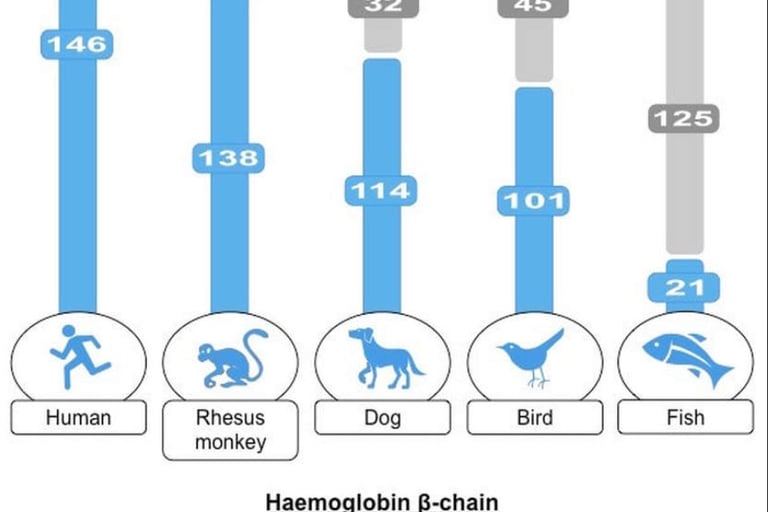
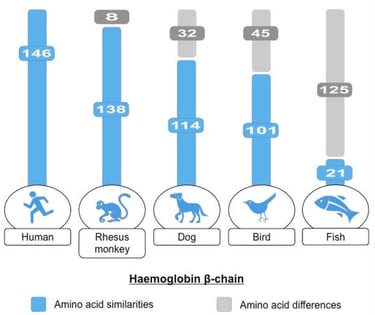
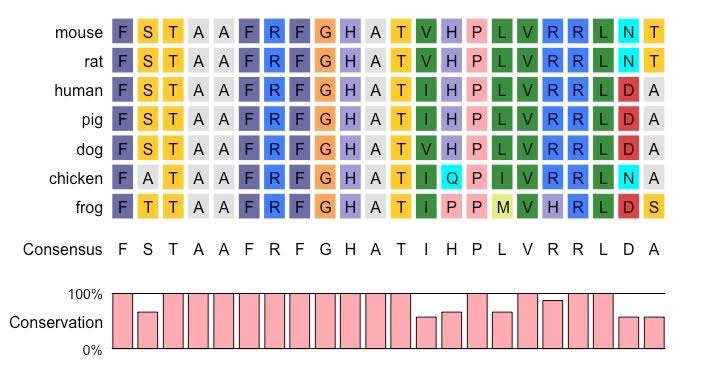
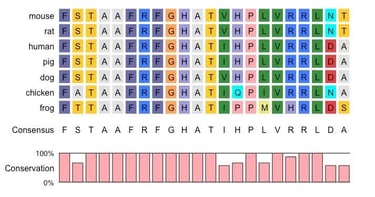
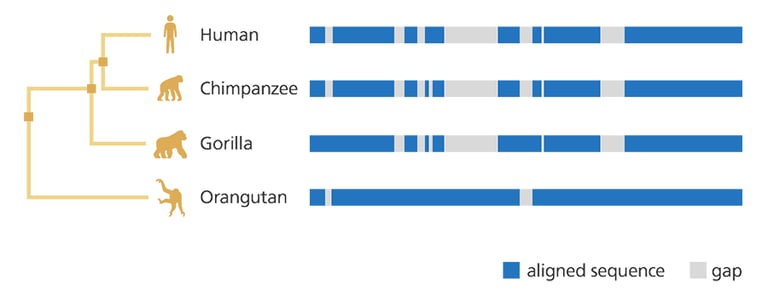
DNA and protein comparisons provide strong evidence for evolution. Species with more similar DNA sequences are more closely related, making molecular data one of the strongest indicators of common ancestry.

Watch Video:
Phylogenetic Trees and Cladistics
Phylogenetic Trees
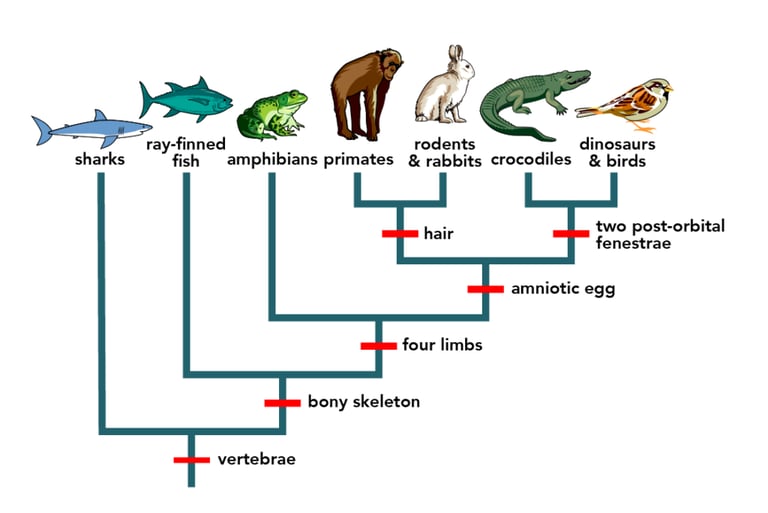
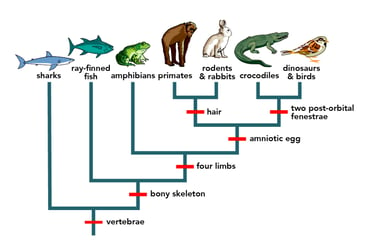
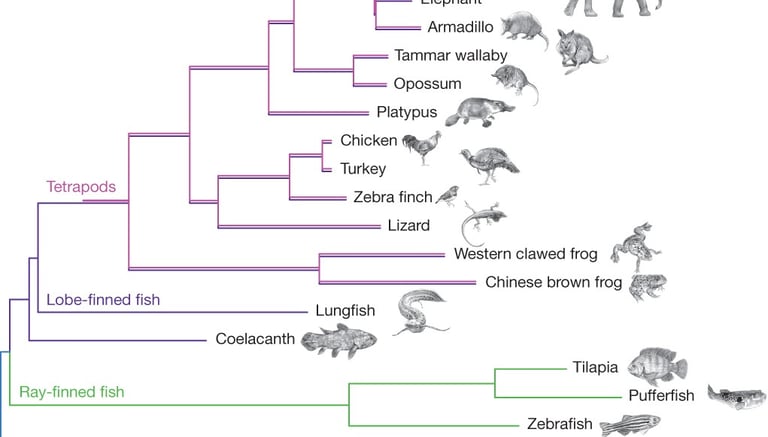
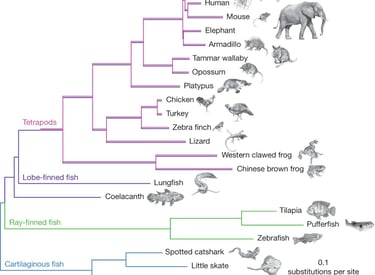
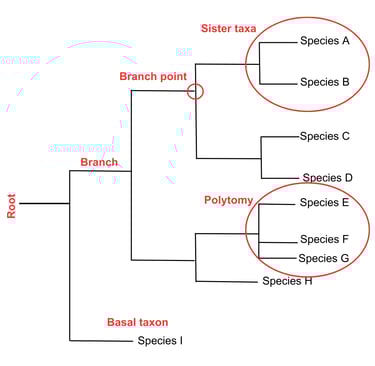
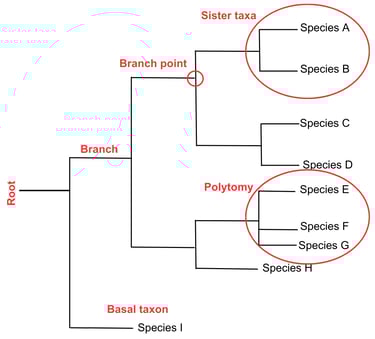
A phylogenetic tree is a diagram that shows evolutionary relationships among organisms.
● Each branching point represents a common ancestor.
● In many trees, the length of a branch shows how much evolutionary change has occurred.

Watch Video:
Clades and Shared Traits
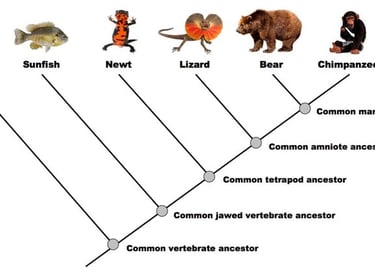
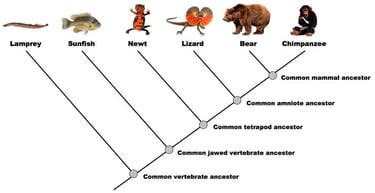
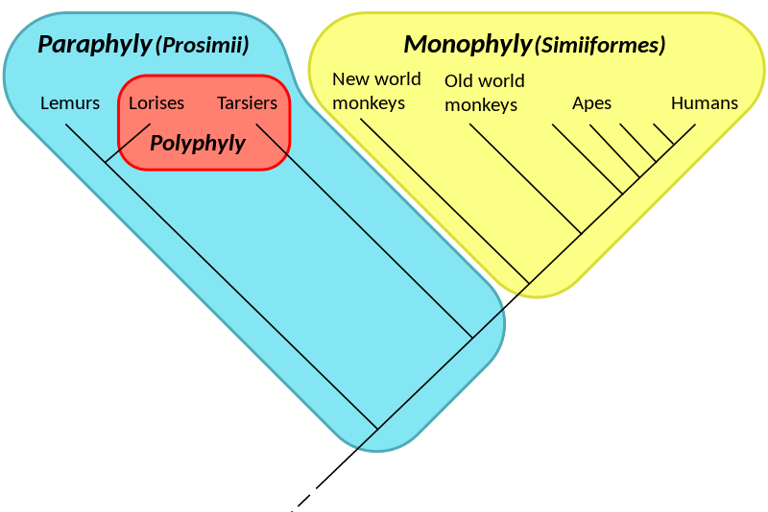
A clade is a group of organisms that includes a common ancestor and all of its descendants.
● Clades are identified using shared derived characters, also called synapomorphies.
● These traits first appeared in the common ancestor and were passed down to all members of the clade.
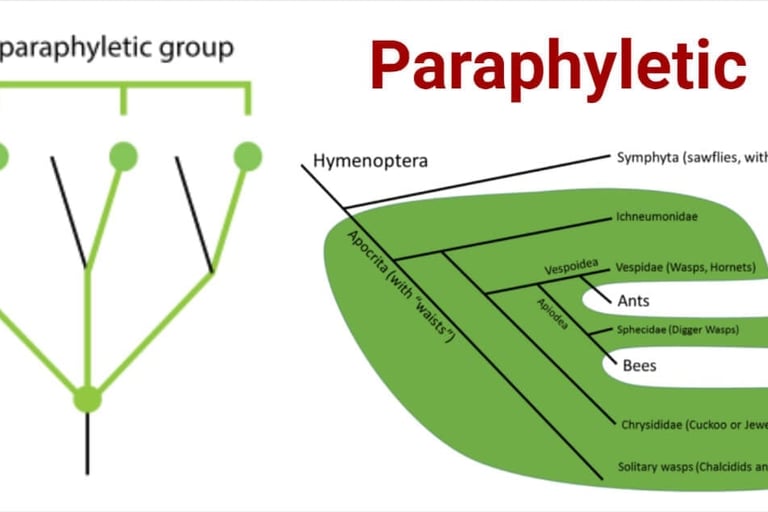
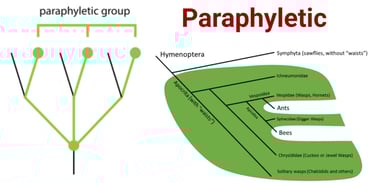
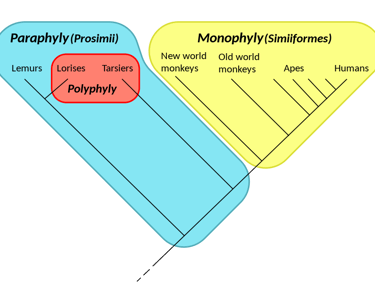
A paraphyletic group includes a common ancestor but leaves out one or more descendants, making it an incomplete evolutionary group.
Adaptation and Natural Selection
Adaptation
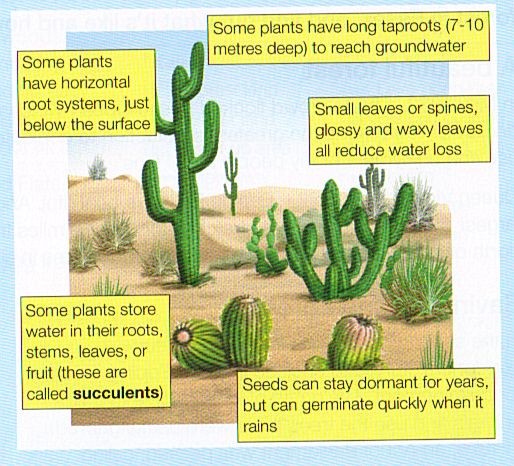
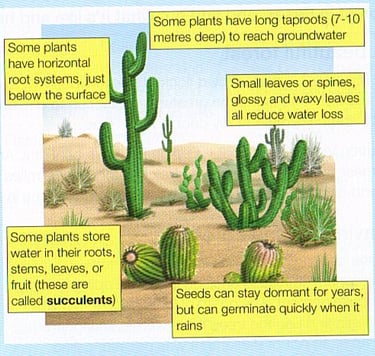
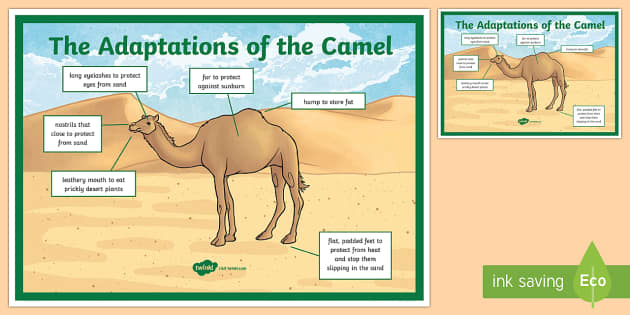
Adaptation is a trait that increases an organism’s ability to survive and reproduce in a particular environment. Adaptations only matter in evolution if they are heritable.
Natural Selection
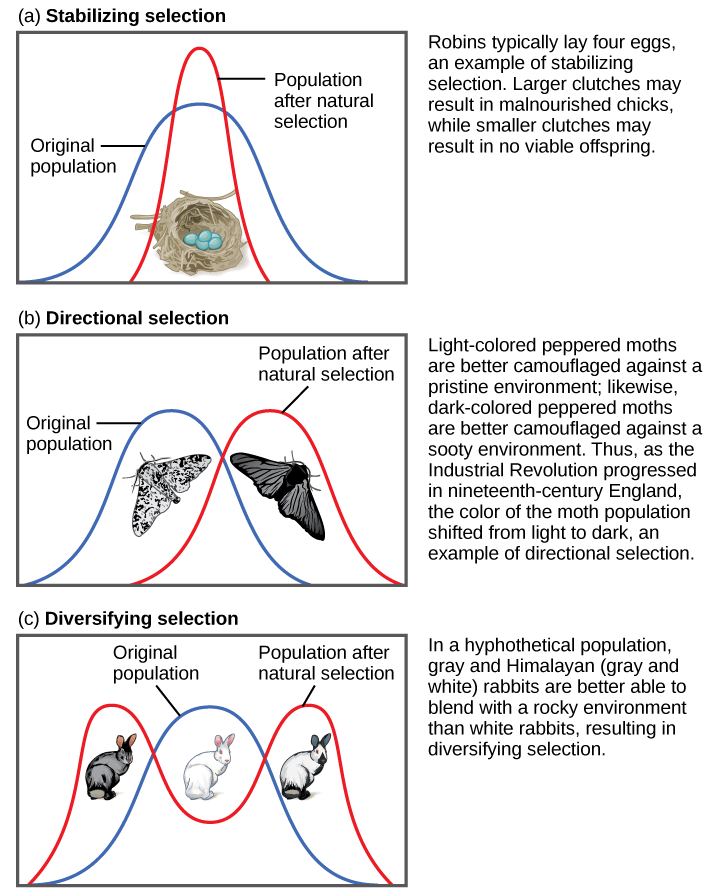
Natural selection is the process by which organisms with favorable traits are more likely to survive and reproduce. Over time, these traits become more common in the population. Organisms with less favorable traits are less likely to pass them on.

Watch Video:
Species Concepts
Biological Species Concept
According to the biological species concept, a species is a group of organisms that can interbreed and produce fertile offspring. Speciation occurs when gene flow between populations is interrupted, leading to reproductive isolation.

Watch Video:
Taxonomy and the Three-Domain System
Carl Woese: Introduced the concept of three domains of life (Bacteria, Archaea, and Eukarya) based on molecular data, particularly ribosomal RNA (rRNA) sequences. This led to a major revision of the five-kingdom system, which was largely based on morphological similarities.
Biogeography
Biogeography: The study of the geographical distribution of species and their adaptations to different environments. It provides evidence for evolution as species in various regions often share common ancestors but have evolved unique traits due to their specific environments.
Key Differences: Three-Domain System vs. Five-Kingdom System
The three-domain system is based on evolutionary relationships determined through molecular data (rRNA), while the five-kingdom system was based primarily on morphological similarities.
● The three-domain system recognizes three primary lineages of life: Bacteria, Archaea, and Eukarya.
● The five-kingdom system included: Monera (prokaryotes), Protista, Fungi, Plantae, and Animalia. The prokaryotes (Monera) were later divided into Bacteria and Archaea in the three-domain system.
Cell Wall Composition (Archaea vs. Bacteria):
● Bacteria have cell walls containing peptidoglycan
● Archaea lack peptidoglycan; some have pseudomurein.
Classification and Identification
Diagnostic Traits
Diagnostic traits are characteristics used to identify species. These traits must be:
● Consistently observable
● Present across all populations of the species
● Reliable for distinguishing one species from another
Key Review Points (Quick Recall)
● Fossils are mostly found in sedimentary rocks
● Evolution means change over time
● DNA similarity is strong evidence of common ancestry
● Synapomorphies define clades
● Homology = same origin, different function
● Homoplasy = similar traits, no shared ancestry
● Adaptations increase survival and reproduction
● Natural selection favors organisms best suited to their environment